Introduction
Anodized aluminum cladding outlasts painted and powder-coated alternatives by decades in real-world conditions — yet most project specifications treat all aluminum finishes as roughly equivalent. That gap in understanding costs project owners money. Builders, architects, and manufacturing firms specifying exterior cladding face decades of UV exposure, salt spray, industrial pollutants, and physical wear. The finish choice drives how much of that wear the building absorbs, and how often maintenance crews have to address it.
This article breaks down the practical case for anodizing: how it differs from surface-applied coatings, where it outperforms them on corrosion resistance and maintenance costs, and what that means for a building's 30-year ownership picture.
Key Takeaways
- Anodizing integrates a hard oxide layer directly into the aluminum surface through an electrochemical process—it can't peel, chip, or flake like painted finishes
- Longer service life, uniform appearance across large facades, and lower lifecycle cost than surface-applied coatings
- Performs well in coastal, industrial, and high-traffic environments where conventional coatings degrade quickly
- The material is 100% recyclable and produces less waste than conventional coating methods
- Skipping or cutting corners on anodizing accelerates surface degradation, raises maintenance costs, and creates uneven facade appearance
What Is Anodized Aluminum Cladding?
Anodizing is an electrochemical process that converts the outer layer of aluminum into dense, hard aluminum oxide. This layer isn't added on top of the metal—it becomes structurally integrated with it. The Aluminum Anodizers Council describes it as:
"an electrochemical process that converts the metal surface into a decorative, durable, corrosion-resistant, anodic oxide finish" through controlled oxidation.
The process works by immersing aluminum into an acid electrolyte bath and passing electric current through it. The Council notes that the resulting oxide layer "originates from the aluminum substrate and is composed entirely of aluminum oxide... fully integrated with the underlying aluminum substrate, so it cannot chip or peel."
Where it's applied: exterior building facades, curtain walls, interior wall panels, commercial fit-outs, and architectural feature panels—essentially anywhere aluminum cladding needs to withstand continuous environmental or physical stress.
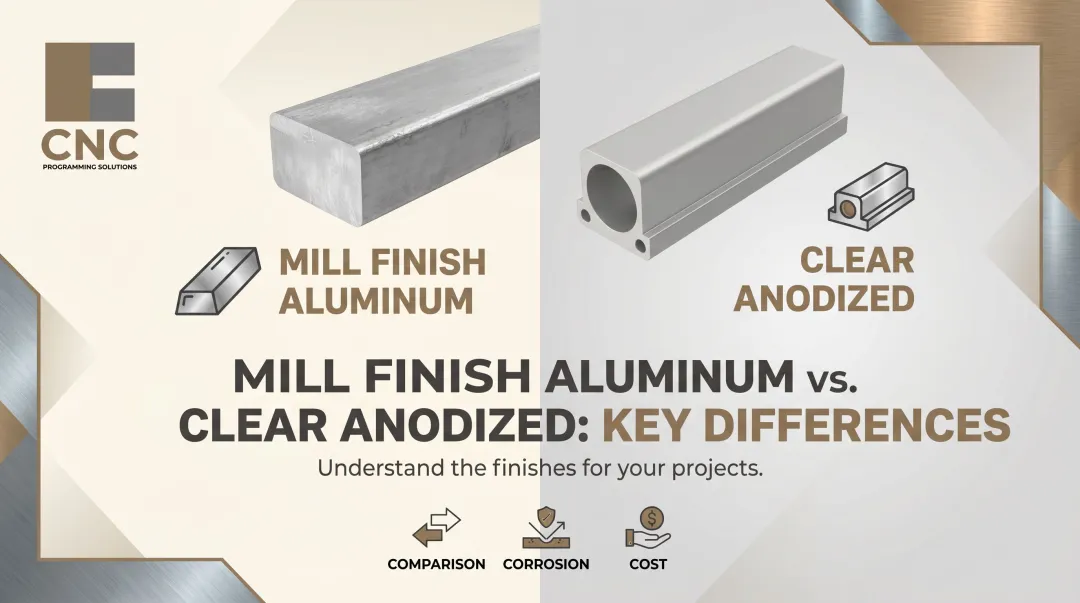
The critical distinction: unlike paint or powder coating that sit on the surface, anodizing becomes part of the metal substrate. That's why anodized finishes routinely last 20+ years in exterior applications without the chalking, fading, or delamination that eventually affect surface-applied coatings.
Key Advantages of Anodized Aluminum Cladding
The advantages below address outcomes that builders, specifiers, and project owners track: surface longevity, maintenance frequency, lifecycle cost, aesthetic consistency, and environmental compliance.
Advantage 1: Exceptional Corrosion and Wear Resistance
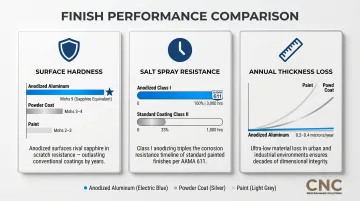
The anodic oxide layer formed during anodizing is chemically stable and extremely hard. Research indicates its hardness reaches Mohs 9—equivalent to sapphire—making it one of the toughest surface finishes available for architectural aluminum. The minimum Vickers hardness per ISO 10074 is 400 HV for Class 1 wrought alloys, far exceeding stainless steel's typical 150-220 HV.
In coastal environments, industrial zones with acid rain, and high-traffic interior spaces, the anodic layer resists degradation that causes painted or powder-coated finishes to fail within years. AAMA 611 Class I anodized coatings must withstand 3,000 hours of salt spray testing per ASTM B 117, versus 1,000 hours for Class II.
Key performance outcomes:
- The oxide layer cannot peel, chip, or flake—buildings maintain their protective barrier with no point of failure exposing raw aluminum to oxidation or staining
- Coating failures require stripping, recoating, scaffolding, and downtime; anodized surfaces outlast organic coatings by decades, cutting unplanned maintenance costs
- Field studies show thickness loss of only 0.2–0.4 microns per year in urban areas, with some 1930s buildings still performing well after 80+ years
This advantage is most relevant for coastal and industrial locations, high-rise facades where access is expensive, and projects requiring 25+ years of performance without a facade overhaul. KPIs directly affected include surface lifespan, annual corrosion-related maintenance cost, warranty claim rates, and facade inspection outcomes.
Advantage 2: Uniform Aesthetic Appearance Across Large Surfaces
Because anodizing runs through an automated electrochemical process—often on coils before fabrication—it produces a uniform oxide layer and color across every panel. This eliminates the batch-to-batch variation common in spray-applied finishes.
On large facade installations where dozens or hundreds of panels must match precisely, even slight color or gloss variation creates visible inconsistencies that compromise architectural intent. AAMA 611-98 establishes measurable standards: range samples shall not differ by more than 5 Delta E (CMC) and gloss shall not vary by more than 15 units.
Why uniformity matters for project outcomes:
- Finish inconsistency triggers panel rejection, rework, and client disputes—consistency protects both schedule and budget
- Anodized aluminum contains no pigments and cannot fade, delivering UV stability that holds gloss and appearance over decades
- After 5 years of South Florida weathering, the maximum permitted color change under AAMA 611 remains just 5 Delta E
This advantage is most critical for large-scale commercial and institutional facades requiring visual consistency across hundreds of square meters, and for prestige projects where a premium metallic finish is central to the design intent. For demanding specifications, anodizing providers such as CNC Programming Solutions—which offers anodizing as part of its finishing services—can deliver the process control these projects require. KPIs affected include panel color/gloss delta values, panel rejection rates, client aesthetic satisfaction, and long-term facade appearance ratings.
Advantage 3: Sustainability and Long-Term Cost Efficiency
Anodizing uses fewer chemical inputs than paint or powder coating, generates less hazardous waste, and extends aluminum's functional life. At end of life, anodized aluminum is 100% recyclable at a fraction of the energy cost of producing virgin aluminum.
Buildings clad in anodized aluminum avoid the VOC-heavy repainting cycles tied to organic coatings and require less frequent maintenance intervention overall. These properties also support green building rating systems such as LEED and BREEAM.
The sustainability case by the numbers:
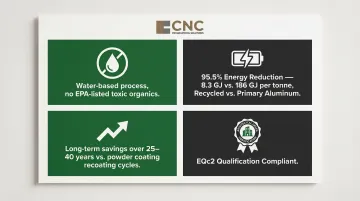
- The Aluminum Anodizers Council confirms anodizing is a water-based process that uses no VOCs and no EPA-listed toxic organics
- Recycled aluminum requires only 8.3 GJ/tonne versus 186 GJ/tonne for primary production—a 95.5% energy reduction
- Upfront cost may exceed powder-coated alternatives, but total cost of ownership over 25–40 years typically favors anodizing once recoating cycles are eliminated
- USGBC treats anodized metal finishes as fully compliant for LEED EQc2 without VOC emissions testing; factory-applied paint finishes do not qualify for this credit
This advantage is most relevant for projects with long design lives, those targeting LEED or BREEAM certification, and procurement decisions evaluated on total cost of ownership rather than upfront material price. KPIs affected include annual maintenance cost over a 25-year window, material recyclability rate, VOC emission avoidance, lifecycle CO2 footprint per square meter, and green building point contribution.
What Happens When Anodizing Is Skipped or Ignored
When specifiers choose lower-cost coatings or painted finishes over anodizing, the trade-off becomes visible in the cladding—and the budget—within a few years.
Common outcomes:
- Painted and powder-coated finishes peel, chip, or chalk within 5-10 years in exposed environments. Even high-performance AAMA 2605 coatings top out at ~20 years—far short of anodizing's 40-80+ year design life.
- Color fade and gloss loss accelerate with UV exposure, aging a facade's appearance faster than expected. Lorin Industries documents that organic coatings "lose adhesion, leading to chalking, chipping, flaking and peeling" over time.
- Repeated spot repairs and recoats create a reactive maintenance cycle that accumulates quickly. For high-rise facades, scaffold-based access makes each intervention particularly expensive and disruptive.
- Non-anodized aluminum with bonded organic coatings is harder to recycle cleanly, limiting end-of-life value and complicating sustainability reporting.
How to Get the Most Value from Anodized Aluminum Cladding
Anodized aluminum delivers its full advantages when critical decisions are made correctly at the specification and procurement stage.
Specify the Right Alloy and Layer Thickness
The Aluminum Anodizers Council identifies Alloy 5005 as "a good general-purpose architectural sheet and plate alloy," while alloys 6063 and 6463 suit extrusions with excellent anodizing characteristics. Lock in your thickness requirements before procurement:
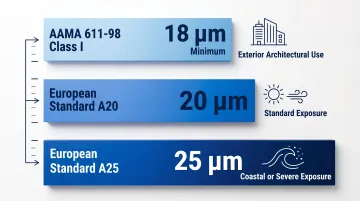
- AAMA 611-98 Class I: 18 microns (0.7 mil) minimum for exterior architectural use
- European standard A20: 20 microns for standard exposure
- European standard A25: 25 microns for coastal or severe exposure environments
Source from a Single Lot or Certified Supplier
Color and gloss variation between panels is the leading cause of specification disputes and rework on facade projects. Sourcing from a single QUALANOD-certified anodizer for a given project surface eliminates this risk. CNC Programming Solutions handles anodizing as part of its integrated machining and finishing services, which ensures component-level consistency when anodized parts are incorporated into larger assemblies.
Establish a Maintenance Protocol at Handover
Anodized surfaces require only periodic cleaning with mild detergent and water. Document this as part of building handover so facilities teams don't default to abrasive or chemical cleaners that can dull the surface over time.
Conclusion
Anodized aluminum cladding's advantages—corrosion resistance, aesthetic consistency, and lifecycle cost efficiency—deliver real, measurable results across maintenance budgets, facade longevity, and building appearance over decades.
The value of anodizing comes down to specifying it correctly from the start:
- Right alloy: Select an architectural-grade alloy suited to the exposure conditions
- Right anodic layer: Match coating thickness to expected wear and environmental load
- Right finishing partner: Work with an anodizer experienced in consistent, class-A results
Buildings treated as long-term assets benefit most from this approach. Specifying anodized aluminum at the outset is the straightforward decision that separates facades that hold up from ones that demand constant intervention.
Frequently Asked Questions
How much does anodized aluminum cladding cost?
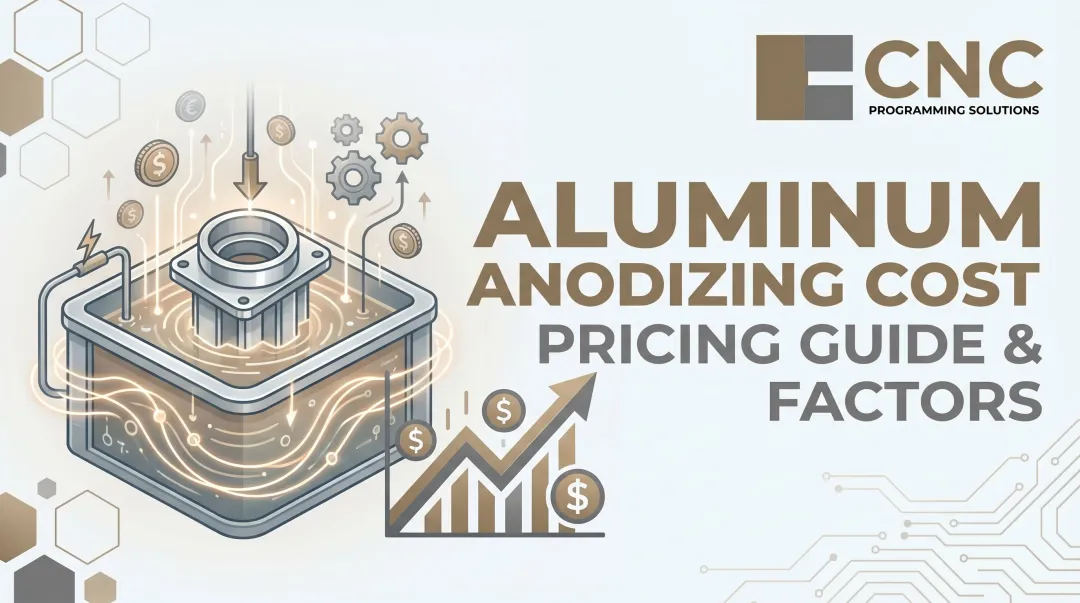
Anodized aluminum cladding costs more upfront than powder coating, with pricing varying by project scale, alloy grade, and anodic layer class. Over a 25-40 year lifecycle, however, it often comes out ahead once maintenance and replacement costs are factored in.
How long does anodized aluminum cladding last outside?
Anodized aluminum cladding routinely lasts 25 years or more, with suppliers offering 20-40 year warranties depending on the certifying standard. Buildings from the 1930s with properly specified anodic finishes remain in good condition — provided they've avoided prolonged contact with cement or strong acids.
What is an anodized aluminum finish?
An anodized aluminum finish is created through an electrochemical process that grows a hard aluminum oxide layer integral to the metal surface. This distinguishes it from paint or powder coating, which sit on top of the aluminum and can peel or chip over time.
Is anodized aluminum suitable for cladding?
Yes, anodized aluminum is widely used and specifically suited for exterior cladding due to its corrosion resistance, UV stability, and low maintenance needs. It's particularly effective in coastal, industrial, and high-exposure environments where organic coatings typically fail prematurely.
What is the 7-20 rule for anodizing?
The 7-20 rule refers to anodic layer thickness standards: 7-10 microns for interior use, and 18-25 microns for exterior or architectural applications. Always confirm the correct class for your environment before specifying — using an interior-grade finish outdoors significantly shortens its service life.
How do you maintain anodized aluminum cladding?
Maintenance is minimal — periodic cleaning with mild detergent and water is sufficient. Abrasive cleaners or harsh chemicals should be avoided as they can scratch or dull the anodic surface. Under normal conditions, no repainting or recoating is needed.