What automotive parts can you make with CNC machines?
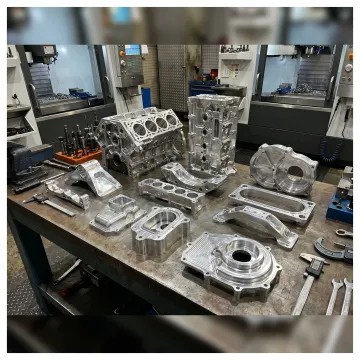
CNC machining can produce a wide range of automotive prototype parts, including brackets, housings, spacers, bushings, shafts, fittings, plates, engine-related components, and custom performance parts. Multi-axis milling supports complex shapes and angled features, while turning is ideal for cylindrical parts. Finishing services such as deburring and bead blasting can also be added to improve function and appearance.
How much does it cost to get a part CNC machined?
CNC machining cost depends on part size, material, geometry, tolerance requirements, machine type, setup time, and finishing needs. A simple 3-axis prototype part is generally less expensive than a complex 5-axis component with tight tolerances and post-processing. Quantities also matter, since one-off prototypes carry more setup cost per part than repeat runs.
Can a CNC machine make car parts?
Yes, CNC machines are widely used to make car parts for prototyping, testing, and production applications. Milling and turning can create precise metal or engineered components with repeatable dimensions and strong surface quality. CNC is especially valuable for custom automotive work because it supports fast design changes, tight tolerances, and complex geometries without requiring dedicated tooling.
What materials are commonly used for automotive prototype CNC parts?
Automotive prototype parts are often machined from aluminum, steel, stainless steel, brass, and engineering plastics, depending on the application. Aluminum is popular for lightweight test parts and housings, while steel and stainless are chosen for strength and wear resistance. Material selection should match the part's intended use, testing conditions, and dimensional requirements.
When should I choose 3-axis, 4-axis, or 5-axis machining?
3-axis machining works well for simpler parts with accessible top-side features such as pockets, holes, and profiles. 4-axis machining is useful when parts need rotary access or machining on multiple sides. 5-axis machining is best for highly complex automotive prototypes with compound angles, sculpted surfaces, and features that benefit from fewer setups and tighter positional accuracy.
Do prototype parts include finishing services?
Yes, prototype parts can include finishing services when the application calls for smoother edges, improved appearance, or added protection. Vibe deburring removes burrs and sharp edges, bead blasting creates a more uniform surface, and anodizing or powder coating can enhance durability and presentation. These options are useful for both functional testing and customer-facing prototype reviews.
How accurate are CNC automotive prototype parts?
CNC automotive prototype parts are valued for their dimensional consistency, repeatability, and ability to hold tight tolerances when designed and machined correctly. Accuracy depends on the part geometry, material, machine setup, and inspection requirements. Multi-axis machining can improve precision on complex parts by reducing repositioning and helping maintain alignment across multiple features.
Can you help with one-off prototypes and low-volume runs?
Yes, CNC machining is well suited for one-off automotive prototypes as well as low-volume runs used for testing, validation, and early-stage production planning. It allows design teams to refine geometry, verify assembly fit, and evaluate performance before committing to larger manufacturing volumes. This flexibility makes CNC a practical choice for iterative development work.